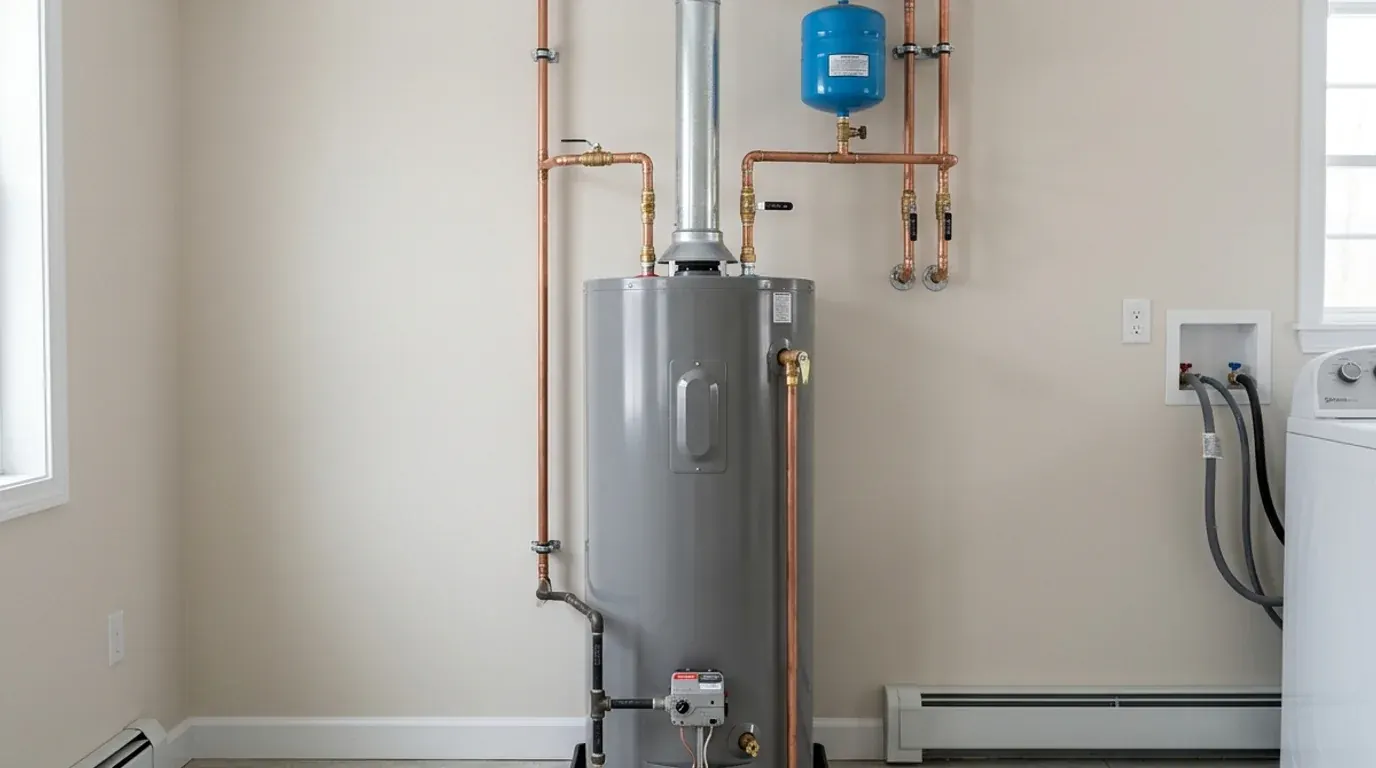
Residential storage tank water heaters remain the proven backbone of domestic hot water delivery across single-family homes and multi-bathroom residences. Selecting and installing a replacement storage tank involves far more than simply setting a steel cylinder in place. Plumbing technicians calculate your household First Hour Rating, evaluate utility room floor loading, and inspect existing cold water intake pressures. Every installation incorporates heavy-duty dielectric unions to prevent galvanic corrosion, a properly sized thermal expansion tank to absorb hydraulic pressure spikes, and a full-port brass drain valve for hassle-free annual sediment flushing. Technicians verify combustion flue draft on gas units or inspect dedicated 240-volt branch wiring on electric models before commissioning the system.
Signs You Need Water Heater Installation or Replacement
Observed Condition: Water puddles continuously beneath the outer steel tank jacket seams.
Observed Condition: Rusty, brownish hot water discharges from bathroom sinks and bathtubs.
Observed Condition: Loud popping and rumbling noises echo during active heating cycles.
Observed Condition: Hot water supply depletes completely in less than ten minutes.
Observed Condition: Storage tank age surpasses ten to twelve years of continuous operation.
Installation Steps & Technical Standards
Technical Protocol: Accurate household First Hour Rating calculations to match family demand.
Technical Protocol: Installation of pre-pressurized thermal expansion tanks on closed loops.
Technical Protocol: Full-port brass quarter-turn ball valves on cold water supply inlets.
Frequently Asked Questions: Tank Water Heater Installation
Four-person households typically require a fifty-gallon storage tank for standard electric systems, or a high-recovery forty-to-fifty-gallon unit for natural gas configurations. Technicians evaluate peak-hour usage patterns—such as morning showers running simultaneously with dishwashing—to calculate First Hour Rating rather than relying solely on raw tank capacity.
Closed residential plumbing systems equipped with backflow preventers or check valves trap expanding water volume as the tank heats. Because heated water expands by two to three percent and cannot compress, pressure surges stress inner tank welds and trigger relief valve weeping. An expansion tank cushions this surge with an internal air bladder.
Decisions center on vessel age, leak location, and repair costs. If water weeps from the steel pressure vessel itself, the internal porcelain lining has failed and replacement is mandatory. Conversely, external components like thermostats or heating elements on units under eight years old are viable candidates for simple mechanical repair.
Atmospheric gas water heaters require dedicated vertical metal chimney flues or B-vent piping with continuous upward pitch to vent combustion gases via natural thermal buoyancy. Installers verify adequate indoor combustion air in the mechanical closet and perform draft hood spill tests to ensure dangerous carbon monoxide exhausts outdoors reliably.
Plumbing codes require corrosion-resistant drain pans beneath storage water heaters installed in attics, interior closets, second floors, or above finished living areas. The pan must measure at least one and a half inches deep and connect to a minimum three-quarter-inch drain pipe discharging to an approved exterior location.
Flushing accumulated calcium sediment annually preserves heat transfer efficiency and quiet operation. Hard water minerals settle onto the tank bottom, creating an insulating blanket that overheats lower steel welds. Opening the full-port drain valve for several minutes each year purges loose mineral slurry before it calcifies into stone.
Joining copper supply piping directly to galvanized steel tank fittings creates a galvanic cell that accelerates electrochemical corrosion, rapidly eroding pipe threads and causing pinhole leaks. Dielectric unions physically separate dissimilar metals using non-conductive polymer bushings and rubber gaskets, ensuring permanent joint integrity over decades of water pressure.
Most like-for-like storage tank replacements take two to four hours of mechanical labor. This window includes draining mineral sediment from the old vessel, disconnecting utility lines, installing seismic straps and expansion tanks, soldering copper supply unions, testing for fuel leaks, and testing water temperatures across household fixtures.
Request Tank Water Heater Installation
Speak with our plumbing dispatch team for prompt scheduling and transparent water heater installation estimates.
Do not suffer through unpredictable water temperatures or leaking tanks that risk property damage. Contact our dispatchers for clear pricing and scheduled water heater installation.