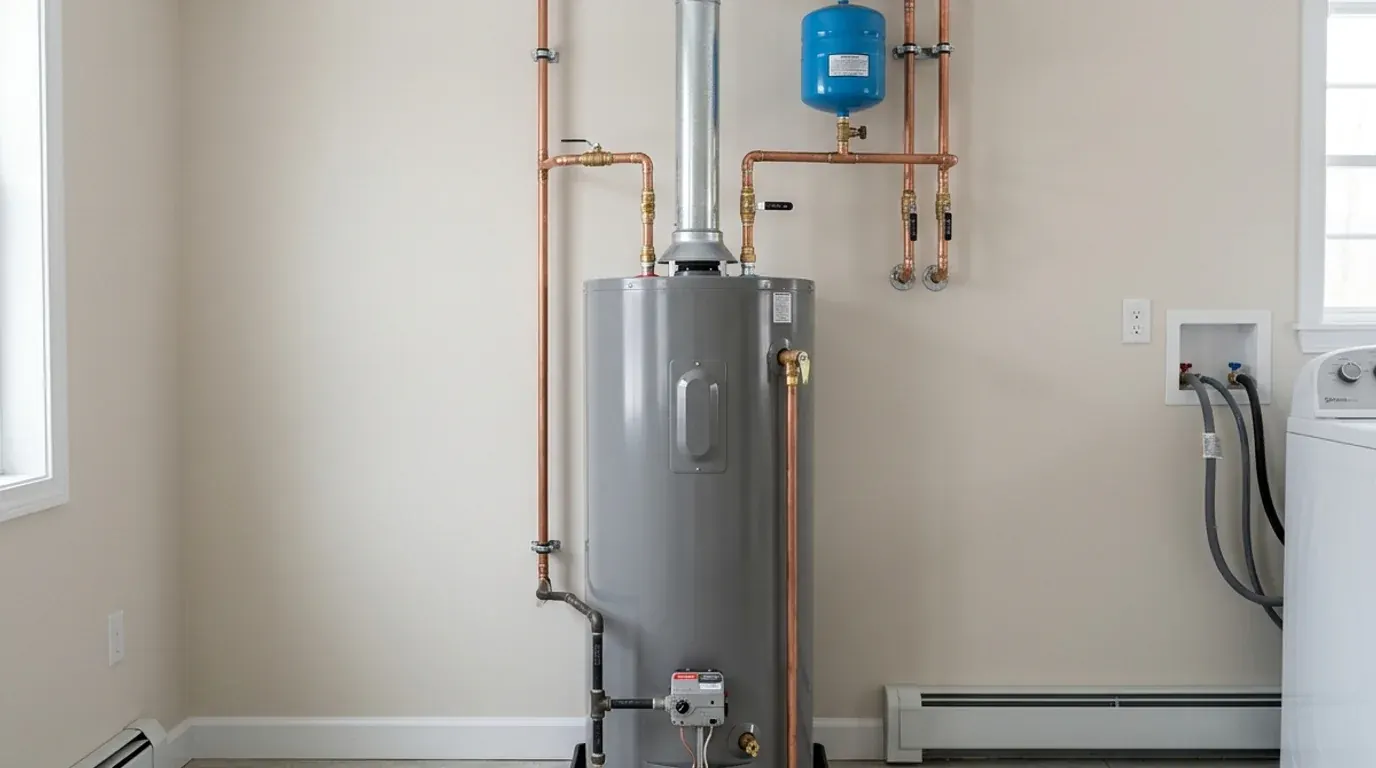
Gas water heaters provide outstanding recovery speed and economical operating costs, making them the preferred choice for high-demand residential households. Installing a modern natural gas or liquid propane water heater requires specialized plumbing and gas-fitting expertise to ensure clean combustion and complete household safety. Plumbing technicians inspect gas supply pipe sizing, evaluate manifold pressure using digital manometers, and install code-required sediment dirt legs to prevent debris from clogging burner orifices. Flue ventilation is thoroughly inspected to verify positive chimney draft or power-exhaust motor operation, eliminating carbon monoxide backdraft risks. Every gas water heater installation includes code-compliant thermal expansion tanks, full-port brass shutoffs, and gas tight-seal bubble leak testing.
Signs You Need Water Heater Installation or Replacement
Observed Condition: Pilot flame repeatedly blows out or flickers with an unhealthy yellow color.
Observed Condition: Gas control valve displays flashing diagnostic error codes or fails to open.
Observed Condition: Rust and carbon soot accumulate around the burner chamber or draft hood.
Observed Condition: Strong gas odors or exhaust fumes linger near the utility closet.
Observed Condition: Storage tank recovery takes hours after normal morning family usage.
Installation Steps & Technical Standards
Technical Protocol: Sediment trap dirt leg installation upstream of the gas control valve.
Technical Protocol: Manometer gas pressure testing across supply and manifold burner circuits.
Frequently Asked Questions: Gas Water Heater Installation
A sediment trap, or dirt leg, is a capped vertical pipe nipple installed downstream of the gas shutoff valve directly before the appliance control valve. As gas turns into the heater, gravity pulls heavy debris, pipe scale, and moisture into the capped pocket, preventing foreign matter from fouling sensitive gas control valves.
Atmospheric units rely on natural thermal convection to vent hot exhaust gases upward through a vertical metal chimney or B-vent. Power-vent models utilize an integrated electric blower fan to push exhaust gases horizontally through PVC pipe, making them ideal for homes without functional vertical masonry flues.
Yes, but only if the manufacturer provides an approved propane conversion kit. Propane operates at much higher manifold pressure and requires smaller burner orifices and different pilot assemblies. Converting a unit without approved factory parts creates severe incomplete combustion, heavy soot, and carbon monoxide hazards.
Confined utility closets require two permanent combustion air openings communicating with well-ventilated attic spaces or outdoors—one within twelve inches of the ceiling and one within twelve inches of the floor. Louvered doors or dedicated fresh air ducts supply the oxygen needed for safe, complete gas combustion.
A healthy gas burner produces a steady, crisp blue flame with minimal yellow tips. Yellow flames indicate incomplete combustion caused by dirty burner ports, restricted combustion air, or incorrect gas pressure, producing dangerous carbon monoxide gas that can spill into surrounding living areas.
Technicians apply high-viscosity bubble leak detection fluid across all newly assembled threaded fittings, unions, and flex connectors, checking for bubbling under operating pressure. They also use sensitive electronic combustible gas sniffers around the gas valve and burner chamber to confirm absolute joint seal integrity.
Standard residential gas water heaters require minimum clearances of one to two inches from side walls and back framing, with at least six inches of clearance around single-wall flue pipes and draft hoods. Power-vent units with double-wall plastic venting allow zero-clearance installations in tighter closets.
Thermocouples generate a small 20-30 millivolt current to hold open safety magnets, whereas thermopiles combine multiple thermocouples to generate up to 750 millivolts. This higher voltage powers digital control boards, diagnostic status LEDs, and electronic thermostats without requiring external household electrical wiring.
Request Gas Water Heater Installation
Speak with our plumbing dispatch team for prompt scheduling and transparent water heater installation estimates.
Do not suffer through unpredictable water temperatures or leaking tanks that risk property damage. Contact our dispatchers for clear pricing and scheduled water heater installation.